
Will Curiosity Overcome Your Fear?
We all have protective reactions in place.
We all have protective reactions in place. It’s about survival and it’s what keeps us from jumping in front of buses and off cliffs. It also can keep us from moving forward. We react as if it’s a life and death situation, but often it’s really just about trying something new. It may not even be dangerous!
Historically, “new” could be risky …
Historically, “new” could be risky as in “Will I die if I eat that plant? Better just stick to the ones I know.” Or even this fear: “If I make a fool out of myself, will I die or suffer or be cast out?” When our survival depended on being take care of by our tribe, this was a serious consideration. Nowadays, that’s just not the case. Being wrong is simply not a good reason to avoid trying something new. Any inventor will tell you that they tried a lot of wrong ways until they got to the one that worked.
By the way, this isn’t a recipe for how to practice your instrument! that’s when we’re training our muscles and neurons. It is however, a recipe for how to move ahead by jumping past unnecessary fear and using curiosity to fuel yourself forward!
This may simply be learning a new way of doing something, or perhaps a little add-on to a skill you already have. Or it may even be learning a new language or instrument! The bottom line is that our protective programs can get in our way.
This is how to manage them:
- Identify the program. What is it based on? A decision you made long ago when you were embarrassed about getting something wrong? A traumatic event that made you decide “never again!”? Something someone told you?
- Have a look at when and how this program has actually served you. Be scientific. Make a list of how and when it kept you safe. Make another list of how and when it may have stopped you from learning or trying something new.
- Check the results. Is your protective program preventing you from growing? From being your authentic self?
- Ask yourself “What is a safe way to try out a new way of doing this?”. Be curious! For example, you can research what solutions other people have found in similar situations. No danger in that. But it will help your logical brain see that it might be worth it to lower the protection a bit. Or you can imagine different outcomes to similar situations without actually carrying them out.
- Try out this new behaviour on someone friendly. You might like to talk it over with a close friend or perhaps try a different kind of response to your usual one in a play-acting situation.Or make a video of yourself with the new way of being. Have a look at the video yourself, and maybe even send it to a trusted friend for feedback.
- Note down how that felt. Were you happy with the outcome? What would you like to tweak? Try it out again on someone else or a small group of supportive folks. Basically, you’re practising the new behaviour in a safe place.
- Now you’re ready to try it out in “real life” – perhaps in a slightly more realistic situation. It might be a difficult conversation you’ve been wanting to have with a colleague, or maybe you just need some outside feedback on the music you’ve been practising but were too shy to ask.
- Once again, keep track of your reactions. Did it make you retreat back to the old program? If so, you need more of steps 4, 5 and 6 before you go to step 7. In any case, you’re off to a great start!
If you’d like some help dealing with any emotions or feelings that might come up, listen to this 9 minute guided visualization with music.
It’s from NLP (Neuro Linguistic Programming) and short cuts a lot of the therapies I did over the years.
If you’re interested in even more depth …
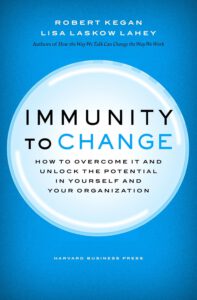
If you’re interested in even more depth on dealing with programs that may be getting in your way, I highly recommend Lisa Lahey’s book “Immunity to Change: How to Overcome It and Unlock the Potential in Yourself and Your Organization”.
Sending Music as a Change Agent,
Nandin
P.S. See and enjoy also my other blogs
P.P.S. If you know of anyone who would like to get my Newsletter, thanks for sharing!
Here’s the link:



Copyright (C) 2026 Nandin Music. All rights reserved.