Mozart’s Secret Wasn’t Just Talent — It Was Play.
Mozart’s Secret Wasn’t Just Talent — It Was Play.
Why Surgeons Get High (And It’s Not What You Think)
You’ve heard the buzz about “flow”—and honestly? The hype is justified.
That blissful state where time vanishes. Where every fiber of your being locks into the present moment. Where you’re so completely there that nothing else exists.
Rock climbers chase it on sheer cliff faces—one slip in focus means one very long fall. Race car drivers find it at 200 mph. Gamers lose entire afternoons to it.
But here’s where it gets interesting: surgeons get addicted to it.
This phenomenon has been documented. Operating requires such extreme presence, such razor-sharp focus, that it creates a kind of elation. How do I know? After he had operated, I once interrupted a doctor (who was still in a kind of flow-ecstasy) with what I thought was a perfectly reasonable question.
He nearly bit my head off.
Turns out, I’d killed his high.
My Own Flow Fix
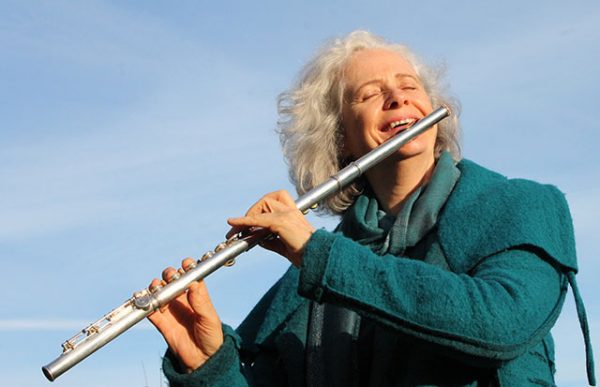
As a musician, I get it. When I’m improvising—especially meditative pieces—I slip into that same blissful state. Time evaporates. The music doesn’t just come from me; it nourishes and supports me.
The difference? Unlike sugar or cigarettes, this addiction actually makes you better.
Which brings me to something fascinating I recently rediscovered—a presentation by a friend about Mozart’s relationship with flow. Turns out, the master composer didn’t just experience flow.
He built his entire life around it.
Let me tell you how..
The Secret to Mozart’s Genius? He Never Stopped Playing
Picture this: Every Sunday after church, the Mozart family gathered for target practice, followed by spirited rounds of cards. Music filled their Salzburg home. Love and laughter echoed through the halls.
This wasn’t just quality family time—it was the foundation of creative genius.
Here’s what most people miss about Mozart:
Yes, he was a prodigy. But more importantly? He was a master of play.
The man knew 17 different card games. He loved games of every kind. He even wrote jokes into the music he composed for his horn player friend—little musical pranks hidden in the notes. And when he sat at the piano during those marathon tours across Europe—improvising in royal courts, losing himself completely in the music—he wasn’t “working.”
He was playing.
The Flow State Connection
Flow researcher Mihaly Csikszentmihályi discovered something fascinating: we slip into flow most easily through play. That magical state where time disappears and everything clicks? It thrives in tension-free environments. It needs that sweet spot between “too easy” and “too difficult.”
Mozart lived in that sweet spot.
With his playful nature pushing boundaries, and his father Leopold providing feedback and guidance, young Wolfgang found the perfect conditions for flow. And flow, as research shows us, is where growth and discovery happen.
The Lesson for Us
Mozart didn’t create masterpieces despite all that play—he created them because of it.
The next time you’re stuck on a problem, maybe the answer isn’t to work harder.
Maybe it’s time to play.
— Adapted from “Mozart and More” by Petra Music
Ready to Try It Yourself?
Want to experience this for yourself, but feeling a bit nervous about improvising? I’ve got you covered.
Check out my Guided Improvisation Visualization—it’s designed to help you overcome any fears and ease you into that flow state. (Fun fact: I literally improvised the music to the words in real time.)
Sometimes the best way to understand flow? Jump in and play. Have fun!

Sending Music as a Change Agent,
Nandin
P.S. See and enjoy also my other blogs
P.P.S. If you know of anyone who would like to get my Newsletter, thanks for sharing!
Here’s the link:



Copyright (C) 2026 Nandin Music. All rights reserved.