
The Flutist Who Practised Without Playing.
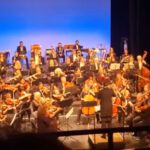
Next weekend, I perform Mozart’s G Major Flute Concerto in a Cathedral.
This weekend, I cannot touch my flute.
Not because I’m lazy. Not because I’m nervous. Because in Germany, Sunday is Sunday— and Monday is Pentecost, which means the law steps in where willpower might not. No power tools. No vacuum. No car washing. No thundering lawn mowers. And musical instruments? Two to three hours a day, maximum — but not on quiet days.
(There are also “silent days,” by the way, where even your local bar is legally prohibited from playing loud music or hosting dancing. Germany does not play around with silence.)
Fines for violations range from a stern warning to thousands of Euros.
Motivation received.
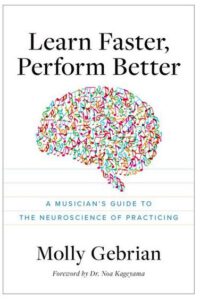
So I did something I’d been meaning to try: mental practice — specifically the approach laid out by Molly Gebrian in Learn Faster, Perform Better.
Molly is a professional viola player. She’s also a neuroscientist. That combination is, frankly, exactly what I needed.
Her core insight? Once you can already play a passage, running through it mentally isn’t just a consolation prize — it can outperform physical practice. Less wear on the body. Just as much rewiring in the brain.
Today I did a hybrid version: fingers on the keys, feather-light breath. Practically inaudible. Extremely inaudible, given the circumstances.
She also makes the case for two things most musicians treat as guilty pleasures: breaks and sleep.
Turns out, sleep isn’t slacking. It’s when your brain actually files everything away into long-term memory. You’ve probably felt it — you struggled with a passage all afternoon, came back the next morning, and suddenly your fingers just knew it. That wasn’t magic. That was consolidation.
Molly herself practices mentally on planes as well as at home. No instrument required. Just focused attention and a working nervous system.
And for fast passages — the ones that feel like you’re asking your fingers to do something physically impossible — she has a method that’s more clever than “play it slowly, then faster.” It involves bumping up speed gradually, yes, but with a specific way of interleaving the segments you’re drilling.
The result isn’t just faster fingers. It’s faster fingers that actually hold up under pressure.
Mozart in a Cathedral, one week from now.
The practice is happening. You just can’t hear it.
Musical greetings!
– Nandin
P.S. See and enjoy also my other blogs
P.P.S. If you’d like to forward this newsletter, I’d really appreciate it !
Here is the link to get it in your inbox:



Copyright (C) 2026 Nandin Music. All rights reserved.